Komfort Auto Parts
Komfort Auto Parts
Komfort Auto Parts
Explore our highly engineered automotive subassemblies and replacement parts tailored for modern high-performance architectures.
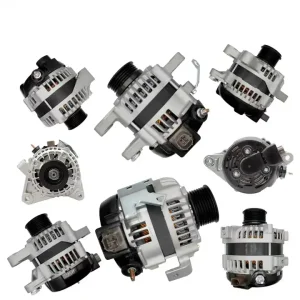
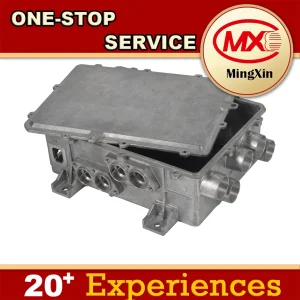
In modern forced induction internal combustion engines, the downpipe serves as the critical initial conduit routing high-temperature exhaust gases away from the turbine housing of the turbocharger. By connecting the turbine outlet flange to the upstream catalytic converter or middle exhaust tract, the geometry and material properties of the downpipe directly dictate the system backpressure, thermal management profiles, and overall engine efficiency.
For industrial buyers, distributors, and tuning companies, securing a consistent supply of premium downpipes requires analyzing thermal expansion parameters, gas velocity drop-offs, and compliance constraints. The optimal design minimizes flow separation immediately post-turbine and mitigates volumetric restriction, thereby unlocking substantial horsepower and torque capacity while safeguarding turbocharger longevity.
High-performance downpipe manufacturing is anchored in metallurgy and fluid dynamics. Leading exporters rely on high-grade austenitic stainless steel, such as SUS304 or SUS321, to prevent oxidation, scale formation, and stress cracking under intense thermal cycling.
CNC mandrel bending ensures a uniform inner diameter throughout the bends, preventing wall collapse and preserving the laminar flow profile of escaping exhaust gases. Conversely, pie-cut downpipes offer customizable geometry but introduce multiple weld seams that can produce boundary-layer turbulence if not back-purged correctly.
Exporters offer downpipes in decat (catless) formats for race-only application, or integrated with high-flow metal matrix substrates. These catalytic converters typically range between 100 CPSI and 200 CPSI (cells per square inch), striking an ideal balance between emissions mitigation and reduced backpressure compared to restrictive 400-600 CPSI OEM ceramic cores.
| Alloy Type | Nickel Content | Max Service Temp | Primary Industrial Use Case |
|---|---|---|---|
| SUS304 Stainless Steel | 8.0% - 10.5% | 870°C | Standard aftermarket, high corrosion resistance in street applications. |
| SUS321 Stainless Steel | 9.0% - 12.0% | 900°C | Heavy-duty applications; Titanium stabilized to eliminate intergranular corrosion. |
| Inconel 625 (Superalloy) | Min 58% | 980°C | Motorsports, hypercar, high-stress racing applications with severe thermal cycles. |
The following competitive analysis profiles the ten leading manufacturers and exporters driving innovation and supply in the turbo downpipe segment:
Operating from the premier automotive industrial hub of Zhejiang, Komfort leverages advanced local supply chains to deliver high-quality custom cast flanges, downpipes, and comprehensive engine, chassis, and body components for OEM and aftermarket distributors.
Renowned globally for integrating high-flow catalyst technologies into exhaust downpipes, ensuring performance optimization conforms directly to strict European emission standards.
Specializing in high-performance exhaust upgrades for European vehicles, they export mandrel-bent downpipes engineered to maximize acoustic feedback and engine output.
A premium manufacturer using proprietary titanium alloys and exotic materials to deliver lightweight, ultra-durable exhaust components for supercars and performance racing.
Supplying direct-fit premium downpipes utilizing premium metal catalysts for exotic platforms, including Porsche, Ferrari, and McLaren.
Focusing on custom dyno testing and hand-welded construction, Supersprint delivers race-spec downpipe options for modern and classic sports platforms.
Utilizing finite element analysis and CAD modeling to manufacture high-efficiency downpipe designs and charge air intercooler systems for sport compact cars.
A key manufacturing hub for volume distribution, specializing in cast bellmouth structures and cost-effective performance exhaust downpipes for JDM imports.
Dominating the Volkswagen-Audi platform aftermarket, APR produces downpipe configurations optimized for integration with their specialized engine software maps.
Industrial buyers face challenges arising from shifting emissions landscapes and cross-border shipping regulations. Addressing these pain points requires robust supplier engagement strategy, including pre-shipment third-party spectrometer checks to confirm alloy integrity and structural validation using computerized CMM measuring arms. Additionally, ensuring clear localized documentation for customs clearance prevents costly delivery delays.
Komfort helps mitigate these logistical risks. With over 15 years of industry experience, Komfort integrates rigorous manufacturing standards and certifications (such as ISO 9001:2008) to guarantee that all structural components, bracket alignments, and weld integrity parameters meet stringent customer demands.
The automotive industry's push toward carbon neutrality is driving advancements in exhaust component technology:
SUS304 features high nickel and chromium concentrations that prevent structural failure under the high temperatures and corrosive environments of turbocharged exhaust systems.
Eliminating restrictive catalytic converters or upgrading to a 200 CPSI metallic core reduces backpressure. This increases turbine efficiency, lowers exhaust gas temperatures (EGT), and allows the engine to generate more power safely.
Leveraging Zhejiang's advanced automotive cluster, Komfort employs precise CAD modeling, specialized welding jigs, and rigorous ISO 9001 manufacturing standards to ensure perfect compatibility and fitment.
Founded in 2004, Komfort has compiled over 15 years of steady and pragmatic development in Zhejiang Province, China's prominent hub for automobile and motorcycle accessories. Utilizing these local industrial clusters and manufacturing resources, Komfort operates as a professional supplier specializing in high-quality engine, chassis, electrical, and body components.
Komfort has implemented the ISO 9001:2008 certification management system and represents the Komfort and QIQI brands. Through sustained quality control and engineering support, the company has built a strong reputation in key export markets.
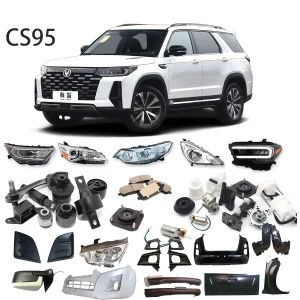
Explore additional high-demand replacement parts, body kits, and structural assemblies optimized for global shipping.
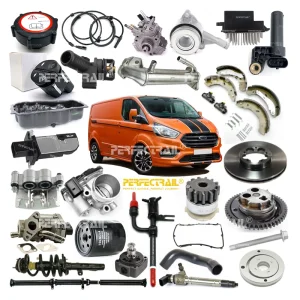
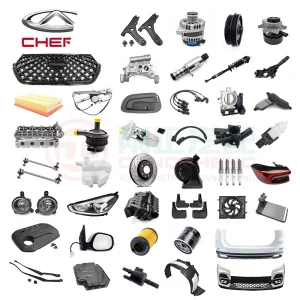
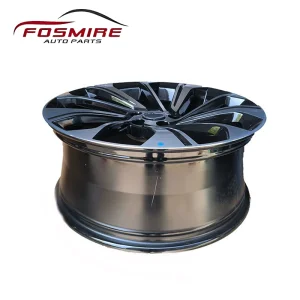
Whether you require custom downpipe fabrication, exhaust flanges, or precision automotive stamping parts, our engineering team can assist you.
Contact Our Sourcing Engineers