Komfort Auto Parts
Komfort Auto Parts
Komfort Auto Parts
Discover our highly engineered automotive and industrial heating elements, precision-machined brackets, sensors, and structural system accessories.
Founded in 2004, Komfort has built a solid and highly respected reputation through more than 15 years of steady, pragmatic development in the automotive and industrial machinery components industry. Strategically based in Zhejiang Province—widely recognized as the heart of China’s automotive and motorcycle accessories manufacturing cluster—we capitalize on unparalleled local supply chain integration and industrial efficiencies.
We operate as a premium, customer-first OEM/ODM supplier specializing in comprehensive categories, including engine components, chassis components, electrical parts, and vehicle body parts. By implementing rigorous quality controls and production standards, we have successfully developed two major proprietary brands: Komfort and QIQI. Our focus is to deliver reliable, long-term thermal transfer and mechanical parts to commercial vehicle, passenger car, and heavy-duty machinery clients worldwide.
An engineering analysis of how automotive heat exchangers manage temperature regulation, cabin comfort, and system durability.
A Heater Core Matrix functions as a liquid-to-air heat exchanger. Positioned inside the vehicle's HVAC dashboard housing, its main role is to warm the passenger cabin using thermal energy harvested from the engine cooling loop. Warm engine coolant flows through the internal tubes of the core, transferring heat to the aluminum or copper fins. The blower motor then forces ambient or cabin air through the matrix, warming it before distribution through the vents.
In addition to traditional internal combustion engines (ICE), the emergence of Electric Vehicles (EVs) and hybrid powertrains has redefined heater core application. Modern systems often use dedicated coolant heaters, heat pump condensers, or PTC auxiliary heating elements integrated alongside a specialized heater core matrix. Designing these components requires an in-depth understanding of thermodynamic principles, fluid resistance, and surface-area optimization to maximize heat rejection while minimizing weight and size constraints.
| Technical Specification | Aluminum Heater Core Matrix | Copper/Brass Heater Core Matrix |
|---|---|---|
| Primary Material | AA3003 / AA4343 clad brazing sheets | C12200 copper tubes, brass headers |
| Joining Technology | Controlled Atmosphere Brazing (CAB) | High-temperature soft soldering / TIG |
| Weight Profile | Ultra-lightweight (optimized for modern EVs) | Heavier, high thermal conductivity |
| Corrosion Resistance | High (enhanced via internal flux coating) | Excellent natural resistance, susceptible to scaling |
| Operating Pressure | Up to 3.5 Bar (continuous working pressure) | Up to 3.0 Bar |
| Fin Configuration | Louvered corrugated fins for high air turbulence | Flat or corrugated high-density fins |
Why global Tier-1 buyers and automotive distributors source heater core matrix solutions from Zhejiang Province.
Based in Zhejiang, Komfort utilizes a direct localized supply network. From raw aluminum ingot smelting, precision sheet rolling, and micro-channel extrusion to packaging and molding factories, we reduce lead times and logistics expenses.
We utilize state-of-the-art continuous CAB (Controlled Atmosphere Brazing) furnace technology. This ensures uniform joint sealing across the core matrix, eliminating structural weak points and preventing coolant leaks.
Quality is built into our process. We implement the ISO 9001:2008 management system from material entry to final dispatch. All units undergo automated air-under-water pressure testing before packing.
From internal combustion platforms to state-of-the-art electric vehicles, Komfort engineers tailored heat transfer solutions.
Modern passenger cars require compact, highly efficient heater cores due to shrinking dashboard packaging spaces. Komfort uses micro-port aluminum tubes and optimized louvered fin geometries to maximize the heat transfer surface area per cubic centimeter. Our lightweight designs help OEMs reduce vehicle weight, improving fuel economy and reducing emissions.
Commercial trucks, agricultural vehicles, and construction machinery operate under continuous vibration and harsh thermal shocks. For these applications, we manufacture reinforced heater core matrices featuring thicker side plates, heavy-duty header tanks, and robust tube-to-header joints. These features prevent cracking from physical fatigue and pressure spikes.
Without engine waste heat, Battery Electric Vehicles (BEVs) utilize PTC heaters or heat pump systems. Komfort develops custom indirect condensers and cabin heater matrices designed to run efficiently with low-conductivity coolants. These units help maintain comfortable cabin temperatures while protecting battery health.
Our OEM/ODM thermal production line utilizes automated processes to ensure consistency and precision:
Key criteria for procurement managers and supply chain directors sourcing automotive heating elements.
We source our raw aluminum coils and copper tubes from verified, certified mills. Mill Test Certificates (MTC) are available for every production run, ensuring reliable chemical compositions and tensile strengths.
Developing custom shapes is straightforward with Komfort. We offer rapid design prototyping based on 2D/3D CAD data, utilizing in-house tooling workshops to reduce development cycles from months to weeks.
Located near Ningbo and Shanghai ports, we coordinate container consolidation, custom outer packaging designs, and moisture-controlled shipping to preserve product quality during transit.
Get detailed answers about OEM customization, manufacturing capacities, materials, and ordering procedures.
We primarily construct our cores using high-grade automotive aluminum alloys, including AA3003 for tubes/fins and AA4343 clad sheets for brazed interfaces. For legacy vehicles, classic restoration projects, or specific heavy-duty machinery, we also manufacture copper-brass heater cores with C12200 tubes and brass tank headers.
Yes. Our engineering department can reverse-engineer heater core designs using customer samples, physical dimensions, or digital technical drawings. We reproduce the matrix thickness, inlet/outlet tube angles, mounting brackets, and tank shapes to ensure a perfect fit in the HVAC housing.
We perform 100% dry air-under-water pressure tests on all finished heater cores at 3.0 to 4.0 Bar. For OEM development phases, we conduct cycle tests, burst pressure tests (exceeding 8 Bar), thermal shock cycles, and salt spray exposure tests to verify durability against corrosion and fatigue.
For custom configurations requiring new stamping and fin tooling, fabrication takes roughly 30 to 45 days. Once tooling is validated, bulk production orders are typically processed and shipped within 30 days, depending on order size and seasonality.
Zhejiang offers an integrated supply network for raw aluminum processing, bracket stamping, custom silicone hoses, and shipping. This helps us optimize manufacturing costs and minimize internal transit times, allowing us to deliver competitive factory-direct pricing.
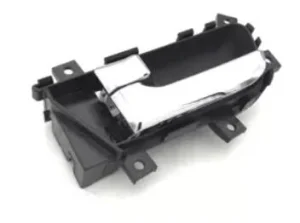
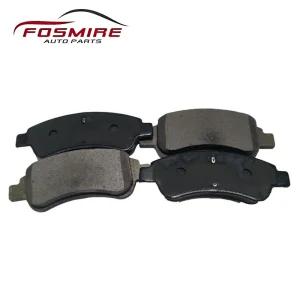
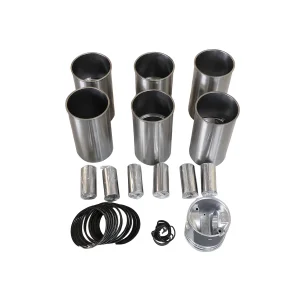
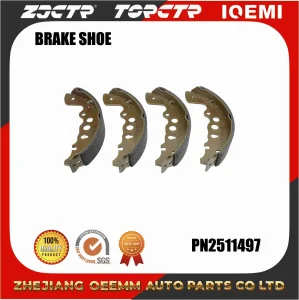
Explore our expanded inventory of heavy-duty auto parts, braking system accessories, suspension shoes, and custom hardware components.