Komfort Auto Parts
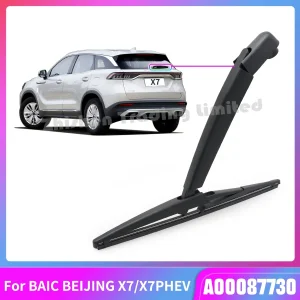
Traditional bracketed wiper blades rely on 4 to 8 discrete pressure points to transfer load from the wiper arm to the windshield. This legacy mechanical architecture inevitably creates localized high-pressure zones interspersed with zero-pressure gaps. Over time, this leads to uneven rubber element degradation, central streaking, and chatter during operation.
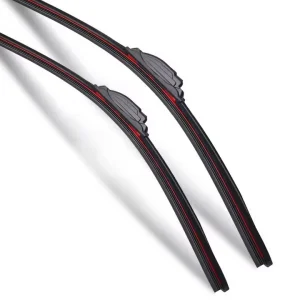
In contrast, modern frameless wiper blades (also known as beam or flat blades) utilize a precision-engineered, memory-curved Evodium mono-steel spline. By performing complex Finite Element Analysis (FEA) during the spring curve design, manufacturers achieve uniform vector force distribution across the entire length of the blade, ensuring consistent contact even on modern curved windshield geometries.
At highway velocities exceeding 100 km/h, conventional metal wiper frames act as drag-inducing bluff bodies. Wind turbulence forces air under the bracket superstructure, causing wind-lift—a critical failure state where the rubber lip loses contact with the glass surface, resulting in dangerous driver visibility degradation.
Frameless wiper blades integrate an asymmetrical or symmetrical aerodynamic spoiler directly into the synthetic rubber extrusion profile. This profile harnesses the oncoming airflow, translating aerodynamic drag into downward vertical force. Consequently, contact pressure increases proportionally with vehicle speed while aerodynamic noise (NVH) is reduced by up to 6.5 dBA.
| Technical Parameter | Legacy Conventional Wipers | Frameless (Beam) Wiper Blades | Wholesale Buyer Impact |
|---|---|---|---|
| Force Distribution | 4–8 Discrete Contact Points | Infinite Continuous Vector Load | Eliminates Streaking & Banding |
| Ice & Snow Accumulation | High (Exposed Metal Joints Freeze) | Zero (Jointless Shielded Profile) | Essential for Cold-Climate Exporters |
| Aerodynamic Drag Coefficient (Cd) | 0.65 – 0.85 (High Drag) | 0.28 – 0.35 (Low Profile) | Improves EV Range Efficiency |
| Acoustic Emission (NVH) | High (Turbulent Chatter) | Ultra-Quiet (< 32 dB Operating) | Meets Tier-1 OEM Standards |
| Lifespan Expectancy | approx. 500,000 Wiping Cycles | 1,500,000+ Wiping Cycles | Higher Retail Satisfaction & Returns Reduction |
The wiping element is the most critical component of any wiper blade. Premium wholesale factories utilize liquid silicone rubber (LSR) or co-extruded natural rubber blended with Chloroprene (CR). Natural rubber provides exceptional elasticity at sub-zero temperatures, while synthetic chloroprene offers high thermal resistance and protection against atmospheric ozone attack.
Furthermore, leading exporters apply thermo-bonded Teflon (PTFE) or micro-graphite surface coatings. This reduces the coefficient of friction against smooth glass down to less than 0.1, completely eliminating judder, squeaking, and stuttering during light rain conditions.
The structural spine of a frameless blade must retain its precise radius curve through millions of wipe cycles and extreme temperature variations. Factories utilize high-tensile, high-carbon spring steel treated via precision heat hardening and anti-corrosion zinc-phosphate coating.
Each steel strip undergoes automatic laser curvature mapping to ensure compliance with specific vehicle OEM windscreen radius profiles ranging from R700mm to R1400mm.
To reduce SKU inventory overhead for aftermarket distributors, top factories engineer modular multi-fit adapter systems. A single frameless wiper body can fit up to 15 distinct wiper arm hook types including: 9x3/9x4 Hook, Pinch Tab, Push Button (19mm & 22mm), Side Pin, Bayonet, and Claw.
Constructed from UV-stabilized POM (Polyoxymethylene) engineering polymer, these adapters maintain high mechanical rigidity and structural integrity from -40°C to +120°C.
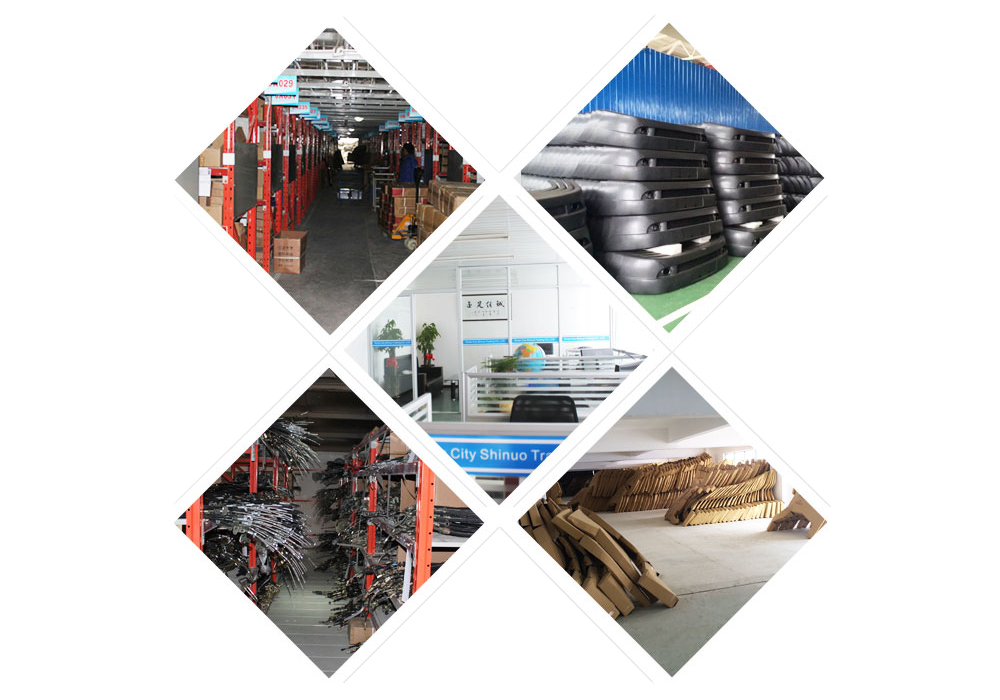
Established 2004 | Zhejiang Auto Parts Industrial Cluster
Komfort was founded in 2004. It has been more than 15 years of steady and pragmatic development. The company is based in Zhejiang Province, which is the capital of automobile and motorcycle accessories in China. It makes full use of the industrial clusters and supporting advantages as one of the most professional auto parts suppliers specializing in Engine parts, Chassis parts, Electrical parts, and Body parts.
The company has passed and strictly implemented the ISO 9001:2008 certification management system and also owns the proprietary registered brands Komfort and QIQI. After years of development, Komfort has established an outstanding reputation in global target markets and the domestic auto supply industry, fully recognized by major automotive buyers worldwide.
Climatic Factor: Extreme sub-zero temperatures, freezing rain, and heavy snowfall.
Technical Solution: Synthetic EPDM-silicone rubber compounds retaining high elasticity at -40°C. Frame-free design avoids snow buildup and ice locking common to metal bracket wipers.
Climatic Factor: Intense UV radiation, desert sand dust, and ambient heat up to +55°C.
Technical Solution: High-concentration chloroprene rubber impregnated with anti-oxidants and specialized graphite coatings to prevent rubber hardening, micro-cracking, and thermal melting.
Climatic Factor: Monsoon rainfall, persistent high relative humidity, and salt fog.
Technical Solution: Dual-water-repellent lip profile capable of clearing high volume water flow (>120 liters/minute) coupled with zinc-coated corrosion-resistant internal spring steel rails.
Vehicle Factor: Extended aerodynamic windshield angles, battery range sensitivity, and ultra-quiet electric cabins.
Technical Solution: Low-profile aerodynamic spoilers with reduced coefficient of drag, whisper-quiet PTFE lip coating, and lightweight recyclable POM components.
Factory quality control laboratories execute stringent endurance testing adhering to global standards such as SAE J903, DIN ISO 9258, and JIS D 5701.
Exporters supplying the European Union, North American, and Japanese markets must comply with environmental and chemical safety frameworks:
Leading factories offer turnkey OEM/ODM services tailored to international distributors and brands:
Widespread implementation of multi-layer surface coatings reducing wear rate and friction during dry wipe operations.
Incorporation of graphene nanoplatelets into synthetic rubber compounds to increase thermal dissipation and tensile strength by 40%.
Wiper blades that automatically transfer micro-layers of glass hydrophobic coating during operation, eliminating the need for manual chemical windshield treatment.
Direct embedded carbon-nanotube heating elements within the blade body to de-ice autonomous vehicle LiDAR & camera windshield zones in real time.