Komfort Auto Parts
Komfort Auto Parts
Komfort Auto Parts
The core shield of drivetrain longevity: Protecting power transmission systems in an era of high torque and demanding environment.
The automotive Constant Velocity (CV) joint boot kit represents one of the most critical defensive barriers in a vehicle's mechanical drivetrain. Tasked with enclosing the CV joint, retaining the lubricant grease, and strictly preventing the entry of external environmental contaminants—such as dirt, water, road salt, and abrasive sand—its failure directly translates to rapid joint degradation. Once a boot ruptures, the internal high-pressure grease escapes via centrifugal force, leading to moisture intrusion, mechanical wear, and catastrophic failure of the entire axle assembly.
Globally, the commercial and industrial demand for high-performance CV joint boot kits is undergoing a profound paradigm shift. The expansion of utility transport networks, off-road applications, and the exponential rise of electric vehicles (EVs) have placed unprecedented strain on drivetrain assemblies. EVs, in particular, deliver instantaneous high torque, requiring CV boots that can withstand rapid acceleration, extreme rotational angles, and high thermodynamic stresses without material fatigue. Consequently, Tier-1 automotive brands, logistics fleets, and distribution giants are looking beyond basic replacement parts to custom-engineered elastomer boots designed for target application profiles.
Advancing beyond standard vulcanized rubber to advanced Thermoplastic Polyester Elastomers (TPEE). This transition delivers greater tear strength, grease compatibility, and chemical resistance across a wider operational temperature range (-40°C to 140°C).
Precise dimensioning remains the chief defense against grease seepage. Advanced tooling ensures dynamic flexibility, allowing the bellows of the CV boot to flex during extreme suspension travel without fold pinching or contact wear.
Global procurers seek all-in-one installation kits. Optimal supply chains deliver a comprehensive solution including a bespoke formulation of lithium/molybdenum disulfide grease, precision earless or Oetiker style clamps, and specialized axle clips.
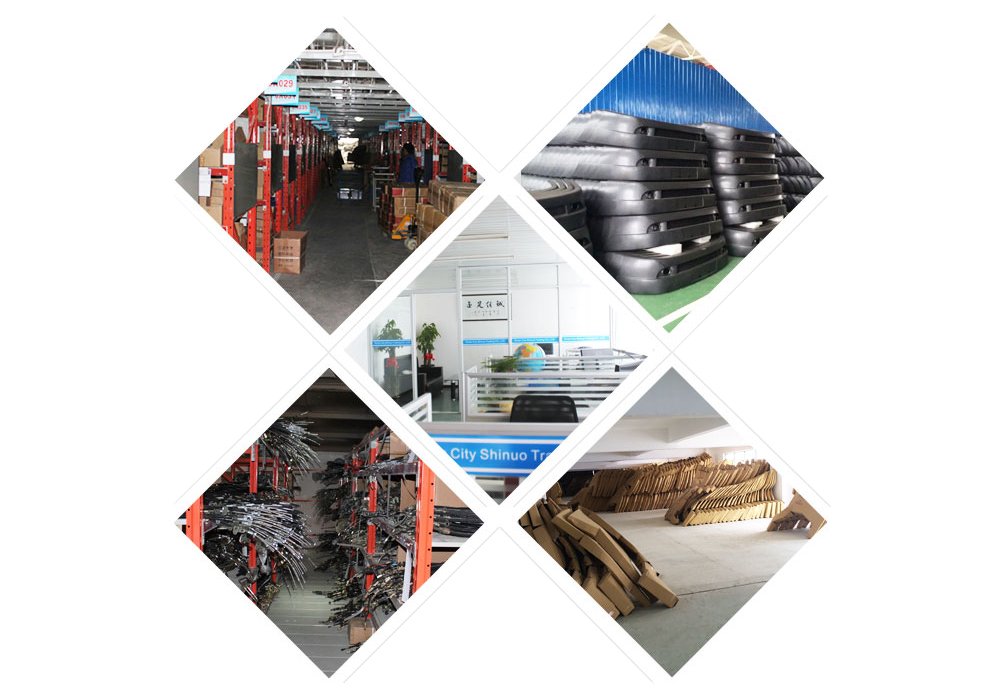
Pioneering Drivetrain & Chassis Supply Chains Since 2004
Founded in 2004, Komfort represents more than 15 years of steady, pragmatic development in the automotive components sector. Based in Zhejiang Province—widely recognized as the capital of automobile and motorcycle accessories in China—Komfort leverages high-density regional industrial clusters and deep vertical supply integration. As one of the most professional automotive suppliers, we specialize in high-durability Engine parts, robust Chassis systems, advanced electrical components, and precision-manufactured auto body parts.
Our operational ecosystem adheres strictly to the ISO 9001:2008 quality management certification, ensuring that raw material processing, injection-blow molding, and mechanical testing conform to international benchmarks. Backed by our proprietary brands Komfort and QIQI, our product groups have secured a commanding reputation across premium global aftermarket distributors, trade partners, and OE manufacturers.
How structural supply chain integration in Zhejiang translates to competitive advantages in cost, engineering speed, and scale.
Located in Zhejiang Province, Komfort leverages a localized network of raw material synthesis labs, tooling design centers, and logistics hubs. By sourcing custom-formulated polymers and stainless steel clamping bands within a 50-kilometer radius, we compress supply chain lead times. This eliminates internal delays, enabling fast transition from customized blueprint approvals to raw material processing.
Modern production facilities utilize high-speed injection-blow molding machines. Unlike traditional compression molding, automated blow molding generates seamless, highly uniform wall thicknesses. This uniform thickness is essential for reducing off-center mass rotation in CV boots operating at rotational speeds exceeding 3000 RPM. Automated quality control sensors reject any components with structural deviations as small as 0.1mm.
Custom designs for industrial machinery or vintage CV joint rebuild kits require specialized tooling. Komfort's internal CAD/CAM design house speeds up the prototyping cycle. Using advanced high-density alloys, we produce precision prototype molds at a fraction of the cost found in Western Europe or North America, allowing procurement managers to execute low-volume specialty runs affordably.
Under our ISO 9001 registration, each batch undergoes dynamic fatigue tests, ozone degradation testing, and high-heat aging tests. This ensures our aftermarket products meet or exceed the performance of OEM brands, reducing warranty claims for importers to near-zero margins.
CV Boot Kit customization tailored to unique geographic, climate, and mechanical challenges.
Designed for Northern European and North American winters, our cold-resistant formulations maintain flexibility at temperatures down to -40°C. Standard boots crack under intense cold-flex fatigue, but our specialized formulas prevent cracking, ensuring CV joints remain lubricated and protected.
Electric vehicles put immense pressure on CV boots due to rapid angular acceleration and instant peak torque. We build customized thermoplastic boots that resist dynamic ballooning under high centrifugal forces, ensuring long-term shape retention.
For agricultural machinery, construction fleets, and off-road recreation, boots face rocks, gravel, and extreme articulation angles. Our reinforced heavy-duty TPEE kits offer industry-leading puncture and tear resistance for demanding field operations.
Understanding supply chain challenges, standard requirements, and procurement strategy in the modern automotive parts sector.
Global procurement teams must balance component cost against potential warranty liabilities. Sourcing low-cost CV boots that fail early leads to high labor costs and complex claims. Modern buyers prioritize suppliers that offer full material tracing, ISO 9001 compliance, and dynamic physical testing data.
Sourcing boots, grease, clamps, and clips from separate manufacturers introduces supply chain complexity and assembly mismatches. Premium procurement relies on unified "Kits" that contain all necessary components, engineered to fit together seamlessly, simplifying inventory management and installation.
Environmental policies like REACH (EU) require non-toxic chemical formulations. Modern suppliers must use materials free from harmful plasticizers and heavy metals, ensuring global compliance for cross-border shipping and retail.
With volatile shipping rates, suppliers with direct access to deep-water ports (like Ningbo or Shanghai) are vital. Komfort's strategic location in Zhejiang allows for efficient logistics planning, reducing transport delays and container handling costs.
Engineering insights, purchasing considerations, and technical support for CV Joint Boot Kits.
Neoprene (Chloroprene Rubber) offers excellent overall elasticity and low-temperature flexibility, making it a reliable standard choice for passenger vehicles. However, Thermoplastic Polyester Elastomers (TPEE) provide superior mechanical strength, puncture resistance, and chemical stability. TPEE boots can be made with thinner walls while maintaining high resistance to high-speed expansion and oil degradation, making them the preferred choice for modern high-torque and premium passenger vehicles.
We use precise 3D CAD modeling software and high-density CNC-cut tooling to ensure exact dimensional accuracy. In production, we run continuous automated checks using optical sensors to monitor outer diameters, bellows thickness, and locking lip tolerances. This ensures every kit fits the axle shaft and housing tightly, preventing grease leaks.
Our kits typically include high-grade Lithium-complex grease containing 3% Molybdenum Disulfide (MoS2). This specific additive creates a durable protective layer on metal surfaces under high load and pressure. For extreme conditions, we can adjust the grease chemistry to provide stable performance from -40°C up to 160°C.
For standard aftermarket parts in our existing catalog, MOQs are highly flexible, starting around 500 kits. For custom OEM designs requiring new tooling, the MOQ typically ranges from 1,000 to 3,000 units depending on size and material choices. Prototype tooling takes about 15–20 days, and bulk production is completed within 30 days after design approval.
Under our ISO 9001 system, we perform material purity testing on raw polymers, test tensile strength, and run dynamic fatigue tests (articulating boots at extreme angles for millions of cycles). We also conduct regular thermal aging tests to verify the boot maintains its shape and performance over time.