Komfort Auto Parts
A car is not a single machine with interchangeable pieces. It is a network of systems, and each part has a specific job. Why do cars need different types of parts? Because braking, steering, cooling, and power delivery place very different demands on materials and design.
A brake pad must tolerate heat and friction. A radiator needs to move heat away from the engine. Suspension components absorb bumps while helping keep the tires in contact with the road. Small differences matter. A part that looks similar may have a different size, connector, or load rating. Fitment depends on the vehicle’s make, model, year, and sometimes engine or trim.
Understanding these differences helps drivers choose suitable replacement parts and ask better questions during repairs. A vehicle owner can check the owner’s manual, compare part numbers, and confirm compatibility with a qualified technician or reputable parts supplier. Guessing can lead to poor fit, extra wear, or an avoidable repair delay. Even common maintenance items vary between vehicles. There is no universal filter or brake component.
This guide explores how parts serve distinct roles, why materials and specifications differ, and what to consider before replacing a component. The categories can overlap; real vehicles are more complicated than a neat chart suggests. That is worth remembering.
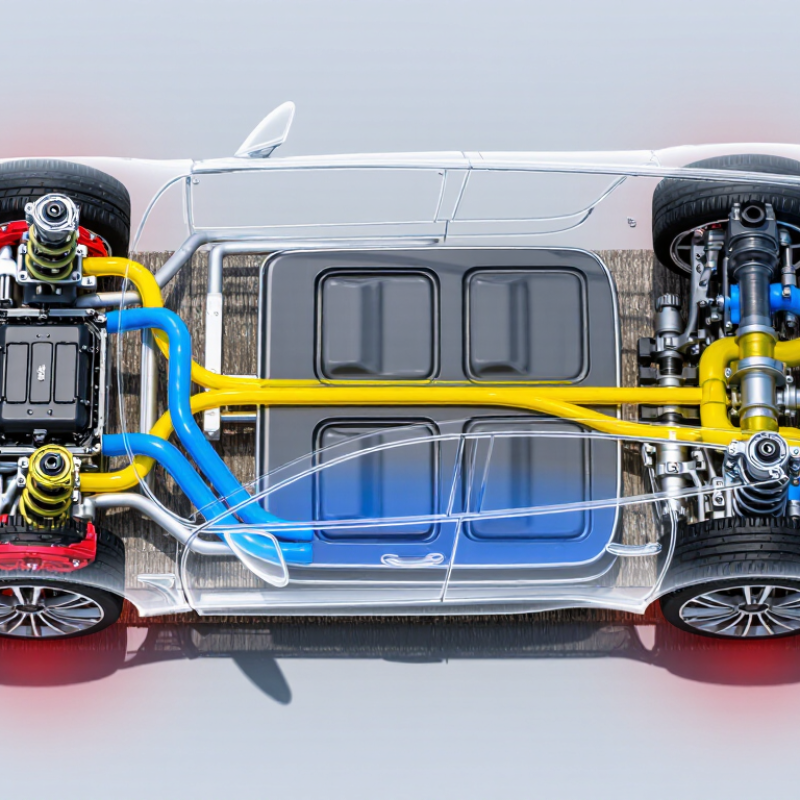
How Cars Group Parts by Function: Powertrain, Chassis, Body, and Electronics
Cars are easier to understand when parts are grouped by their jobs. The powertrain creates motion: it includes an engine or motor, transmission, fuel system or battery, and cooling hardware. During acceleration, torque travels through shafts to the wheels. Heat or a cooling problem can interrupt that chain. The U.S. Department of Energy’s Alternative Fuels Data Center reports that electric vehicles convert over 77% of grid electricity into power at the wheels, compared with about 12–30% for gasoline vehicles. The difference shows how powertrain design affects efficiency, not just part names.
The chassis manages contact and control. Springs absorb a pothole’s jolt, while brakes, steering, and tires help keep the car stable. The body includes the occupant structure, doors, glass, and outer panels; crumple zones deform to absorb crash energy. Electronics link these systems through sensors, wiring, controllers, and software. Boundaries blur. A wheel-speed sensor, for example, feeds information to brake-control systems. The IEA’s Global EV Outlook 2024 reported almost 14 million electric-car sales in 2023, around 18% of global car sales, highlighting the growing need to coordinate batteries, motors, and controls. These categories help with diagnosis, but faults can cross them. A loose connector may look like a mechanical problem. That distinction deserves care.
Cars place different demands on each part. A suspension arm faces repeated impacts, twisting forces, and vibration from rough pavement. Steel often suits such jobs because it is strong, stiff, and relatively affordable. A door beam also needs to resist sudden loads. Strong, but heavy. That extra mass can affect efficiency, so engineers may use steel only where its strength matters most.
Aluminum weighs less than steel, making it useful in wheels, housings, and some body structures. Lower mass can help a vehicle respond and stop, but aluminum parts may need careful shaping to handle the same loads. Heat changes the equation, too. Brakes can become extremely hot during repeated hard stops, while nearby components must keep their shape and strength. Material choice depends on the part’s temperature range, not just its weight.
Polymers bring different advantages. A dashboard panel can be light, shaped around complex curves, and less prone to corrosion than metal. Some polymers also absorb vibration, which can reduce rattles. Yet heat may soften or age certain plastics, especially near an engine or exhaust system. Not always. Engineers check the specific grade, thickness, and exposure conditions. Material charts help, but they cannot capture every road, repair, or aging pattern. Real-world wear sometimes reveals a trade-off that looked minor on paper.
A car’s parts face very different consequences when they fail. A cracked cup holder is annoying. A fault in steering assistance can change how the vehicle responds on a wet road. ISO 26262 helps engineering teams assess risks in automotive electrical and electronic systems. It does not simply stamp every component with a safety grade.
The standard uses Automotive Safety Integrity Levels, from ASIL A to ASIL D. D represents the most stringent safety requirements; A is the least stringent ASIL level. Teams assess hazards using factors such as possible injury severity, exposure to the driving situation, and the driver’s ability to control the outcome. Some situations are classified QM, meaning no ASIL-specific target applies. That does not mean the part can be careless or poorly made.
Context matters. A sensor used for a warning may need different safeguards from one that directly influences braking. The same component can also support different safety goals in different vehicle designs. Higher ASIL targets generally demand stronger development processes, traceability, verification, and evidence that faults are handled safely. Engineers may test how a control unit reacts when a signal freezes, or when two readings disagree. Real roads are messier than test cases. Risk assessments need careful review, and assumptions can miss details. A classification guides the work; it does not guarantee that failures are impossible.
A 12-V system suits familiar loads such as lamps, control units, and infotainment. But powering high-demand devices at low voltage requires substantial current. For the same 1.2-kW load, a nominal 12-V circuit draws about 100 A; at 48 V, it draws about 25 A.
These are ideal calculations using power equals voltage times current, not measurements from a particular vehicle. Less current can reduce cable thickness and resistive heating, though real-world losses still matter. Not every 48-V installation is automatically lighter or more efficient.
The difference changes parts, not just wiring. A 48-V architecture needs compatible batteries, power electronics, connectors, fuses, and service procedures. Components designed only for 12 V may not tolerate its operating range or electrical transients.
ISO 21780:2020 sets testing requirements for 48-V vehicle supply systems, reflecting the need to validate components as a matched system. In practice, engineers also manage how 12-V and 48-V networks exchange power, often using a DC-DC converter. That converter adds cost and heat, details that can be easy to underestimate.
One system does not simply replace the other; the right parts depend on loads, packaging, and vehicle design.
Cars need different parts because each performs a distinct job under different conditions. A brake controller, camera, and cabin display do not face identical risks. Yet they may exchange data. Even a connector or software update path can create an opening for attack. Small details count.
ISO/SAE 21434 provides a framework for managing cybersecurity risks throughout a vehicle’s lifecycle. It encourages teams to identify valuable assets, trace data flows, assess threats, and choose safeguards. These decisions can shape component design, from secure boot and diagnostic access to update controls. A sensor sending speed data needs protection against false messages. A service port needs tightly controlled access. The standard does not prescribe one universal component or security recipe.
Teams must revisit assumptions as designs change and new weaknesses emerge. Testing can include interrupted updates, malformed inputs, and unexpected network traffic. Records help explain why a risk was reduced or accepted. Still, a checklist is not proof of security. Deadlines can push testing late, and that deserves scrutiny. A component may work perfectly on a bench yet behave differently in a connected vehicle. Cybersecurity work continues after launch.
The main groups are powertrain, chassis, body, and electronics. Their boundaries sometimes overlap.
It creates and delivers motion. An engine or motor sends torque through the transmission and shafts to the wheels. Cooling problems can interrupt this process.
Springs soften jolts from potholes. Brakes, steering, and tires help maintain control and stability.
It includes the occupant structure, doors, glass, and outer panels. Crumple zones deform to absorb crash energy. They are designed to deform.
A wheel-speed sensor sends information to brake controls. A loose connector can also mimic a mechanical fault, so diagnosis needs care.
Steel handles repeated loads well but adds weight. Aluminum is lighter, while polymers can form complex shapes and resist corrosion. Each has trade-offs.
For an ideal 1.2-kilowatt load, a 12-volt circuit draws about 100 amps; a 48-volt circuit draws about 25. Real losses still matter.
Not always. A 48-volt system needs compatible batteries, connectors, fuses, and power electronics. A converter may link it to the 12-volt network, adding cost and heat. That detail is easy to underestimate.
Why do cars need different types of parts? Because each part performs a distinct job under different conditions. A vehicle’s powertrain generates and delivers motion, the chassis supports handling and loads, the body protects occupants and shapes the exterior, and electronics manage functions such as sensing and control. These roles expose components to different forces and temperatures, so designers choose materials accordingly: steel can provide strength, aluminum can reduce weight, and polymers can offer flexibility and insulation.
Safety and electrical demands also shape component design. Safety-critical systems are assessed using ISO 26262’s ASIL A–D risk classes, helping determine the level of care needed in their development. A 12-volt system and a 48-volt system have different electrical requirements, so they use components suited to their voltage and power needs. Meanwhile, ISO/SAE 21434 encourages cybersecurity considerations throughout vehicle component design, helping connected systems account for potential digital risks as well as physical ones.
