Komfort Auto Parts Komfort Auto Parts

China Top 10 Common Mistakes When Buying Auto Parts?

Time:2026-11-15 Author:Charlotte
0%

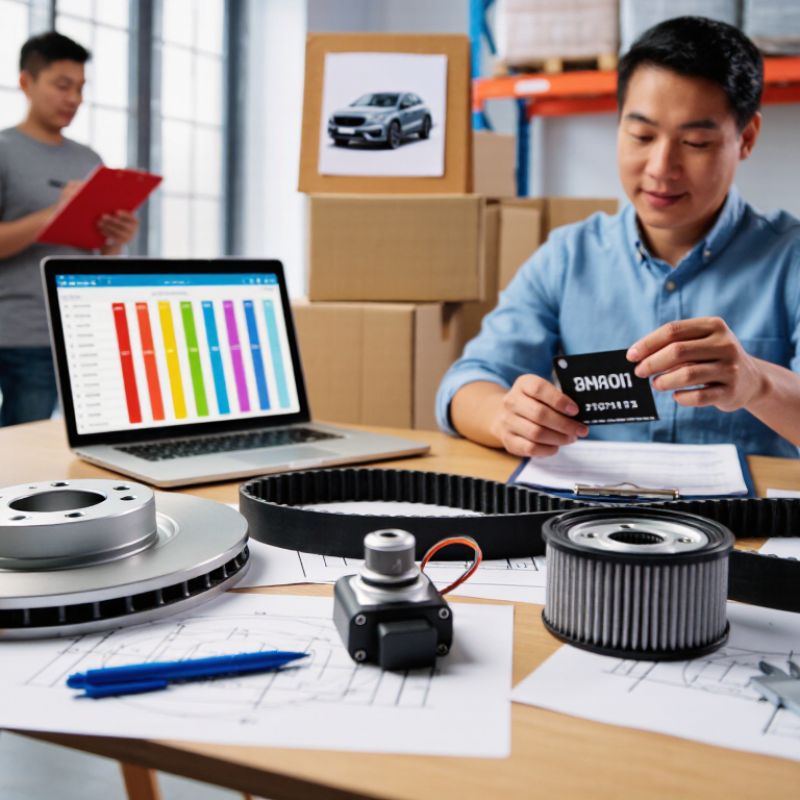
Buying auto parts from China can offer broad choice and competitive pricing, but a low quote is only one part of the decision. What are common mistakes when buying auto parts? Buyers often focus on price and overlook fitment, material specifications, supplier communication, or shipping details. A part that looks right in a product photo may not match the vehicle’s model year, engine, or trim.

Small checks matter. Compare the vehicle identification number, OE reference, dimensions, and product drawings before ordering. Ask for clear photos of the actual part, its label, and its packaging. If possible, review a sample and confirm the inspection criteria in writing. Keep the details together. This makes later questions easier to answer.

Supplier claims also deserve careful review. Request relevant quality documents, warranty terms, and a written explanation of how defects are handled. Confirm quantities, packaging, lead times, and delivery responsibilities before payment. One overlooked detail can cause delays or returns. It happens.

This guide outlines ten frequent buying mistakes and practical ways to reduce avoidable risk. It is not a substitute for a qualified mechanic’s advice or a proper technical inspection. Even experienced buyers can miss something when orders move quickly. I would not assume that a polished catalog proves a part will fit. Verify the evidence, ask specific questions, and leave room to reconsider when an answer is vague.
China Top 10 Common Mistakes When Buying Auto Parts?

Identify the Correct Part Using the VIN’s 17 Characters (ISO 3779)

China Top 10 Common Mistakes When Buying Auto Parts?

A useful way to avoid ordering the wrong part is to start with the vehicle’s 17-character VIN. ISO 3779 defines the VIN format, but each section needs careful reading. Characters 1–3 identify the vehicle’s manufacturer and region. Characters 4–9 describe vehicle attributes, while characters 10–17 identify details such as model year and production sequence. Exact meanings can vary by market and vehicle.

Check the VIN on the vehicle itself, not only on an old invoice. You may find it at the windshield base or on a door-jamb label. Compare every character with the registration document. One digit matters. The letters I, O, and Q are not used in standard VINs, which helps prevent confusion with numbers. A decoding tool can provide clues, but it should not be treated as final proof of fitment.

I used to think a matching model year was enough. It isn’t. Two vehicles with similar VIN details may have different engines, trims, build dates, or connectors. Before ordering, give the supplier the full VIN and confirm the part number, engine size, and production date. For a sensor, compare the plug shape and wire count; for a brake component, verify the axle and dimensions. A careful double-check takes minutes. A mistaken assumption can leave you with a part that looks right but will not fit.

China: 10 Common Mistakes When Buying Auto Parts

Identify the correct part using all 17 VIN characters (ISO 3779).

The scores are an illustrative verification-priority scale (1–5), not measured mistake rates. A VIN has 17 characters: positions 1–3 identify the manufacturer, 4–9 describe the vehicle, and 10–17 identify the vehicle within the manufacturer’s system. Confirm the part against the full VIN and vehicle-specific details; VIN conventions and fitment can vary by market and model.

Check Fitment, OE Numbers, and Interchange Data Before Ordering

China Top 10 Common Mistakes When Buying Auto Parts?
Check Fitment, OE Numbers, and Interchange Data Before Ordering

A part can look identical and still fail to fit. Match the vehicle’s year, make, model, engine, trim, and production date before ordering. Check the VIN when available, especially for mid-year changes. One digit matters. A catalog result is a starting point, not proof.

Compare the OE number and any superseded numbers against the seller’s interchange data. Confirm details such as connector shape, mounting points, dimensions, and left- or right-side position. For sensors, verify the plug and wire count; for brake parts, compare the axle and configuration. “Fits this model” may hide important exceptions. A small admission: even careful catalog checks can miss a mismatch, so ask for clarification when the data conflicts.

The scale of the market makes accurate identification worthwhile. The Auto Care Association and MEMA’s 2024 Joint Channel Forecast put U.S. light-duty aftermarket sales at about $391 billion in 2023, with a 2024 forecast of $405 billion. That figure describes market sales, not fitment errors. As a broader returns benchmark, NRF and Appriss Retail estimated that 16.9% of U.S. retail sales would be returned in 2024; it is not an auto-parts-specific rate. Keep screenshots of the listing, OE number, and fitment notes. Close is not enough.

Verify Supplier Quality: IATF 16949 and UNECE R90 Brake Standards

A common mistake when buying auto parts in China is treating a supplier’s certificate as proof that every part is safe. IATF 16949 certifies a quality management system, not the performance of an individual brake component. Check that the certificate is valid and covers the actual factory making your order. Ask for batch traceability, inspection records, and clear details about the production site. A polished certificate can still leave gaps.

For replacement brake parts, verify whether the exact product and vehicle application have UNECE Regulation No. 90 approval where required. Check approval markings and supporting documents against the part supplied; do not rely on a catalogue image alone. WHO’s Global Status Report on Road Safety 2023 estimates 1.19 million road deaths worldwide each year. That figure is not specific to faulty parts, but it shows why brake quality deserves careful checks. Ask the supplier how test samples were selected and whether production batches are monitored. I have seen buyers focus on price and miss a mismatch in part numbers. It is an easy mistake. Independent document checks can help, though paperwork cannot replace physical inspection.

China: Top 10 Common Mistakes When Buying Auto Parts — Verify Supplier Quality, IATF 16949 and UNECE R90 Brake Standards
No. Common Mistake Why It Matters What to Verify Before Ordering
1 Choosing a supplier by price alone A low quotation may exclude testing, packaging, documentation, or agreed inspection requirements. Inconsistent quality can create returns, downtime, and safety risks. Compare quotations against the same part specification, order quantity, packaging, delivery terms, inspection plan, and warranty. Request a written quality-control process and sample approval before mass production.
2 Assuming an IATF 16949 certificate guarantees every product IATF 16949 concerns an organization’s quality management system within a defined scope and site. Certification alone does not prove that a particular part is approved, suitable, or defect-free. Check that the certificate is current, covers the relevant manufacturing site and activities, and is issued by an appropriately recognized certification body. Confirm the part’s specifications, validation records, and production controls separately.
3 Treating UNECE R90 as applicable to every brake component UNECE Regulation No. 90 applies to specified replacement braking components, including certain replacement brake linings and discs or drums, subject to the regulation’s scope and applicable market requirements. It is not a blanket approval for all brake parts. Confirm whether R90 applies to the exact component, vehicle category, and destination market. Where applicable, request the relevant approval documentation and check that the component carries the required approval marking. Do not rely on a generic “R90 compliant” claim.
4 Ordering by a general part name instead of exact fitment data Parts with similar descriptions can differ by vehicle generation, engine, production date, axle, trim, or brake configuration. A visually similar item may not fit or function correctly. Provide the vehicle identification details needed for catalog matching, such as model, model year, engine, production date, axle position, and original part number. Ask the supplier to confirm fitment in writing before purchase.
5 Ignoring technical specifications and tolerances Differences in dimensions, materials, surface treatment, electrical characteristics, or operating limits can cause installation problems, premature wear, warning lights, or unsafe performance. Use a controlled drawing or specification that identifies critical dimensions, materials, tolerances, applicable test methods, and acceptance criteria. Agree on revision control and how changes will be approved.
6 Failing to verify the actual manufacturer and production site A trading intermediary may not control production or may provide incomplete traceability. The name on a quotation may not identify the facility that makes the part. Ask for the legal supplier details, manufacturing-site address, production responsibility, and a clear explanation of any subcontracted processes. Confirm that certificates and audit records relate to the actual site and scope involved.
7 Skipping sample approval and pre-shipment inspection A sample may differ from later production, while packaging or labeling issues may only become apparent after shipment. Undetected defects can affect an entire batch. Approve a representative sample against documented criteria. For higher-risk orders, agree on an inspection plan covering dimensions, appearance, function, labeling, packaging, and sampling levels before production or shipment.
8 Accepting vague test reports or certification claims A report may concern a different part number, material, production site, or test version. A supplier’s statement is not a substitute for identifying the evidence behind a claim. Check the report issuer, test date, sample identification, test method, results, and scope. Match the tested item to the ordered specification and ask for clarification if the report does not establish that connection.
9 Overlooking traceability and change control Without batch records, it can be difficult to investigate defects or limit a recall. Unapproved changes to materials, tooling, or production processes can affect performance and consistency. Agree on batch or lot identification, production records, defect-handling procedures, and retention of relevant inspection records. Require notification and approval for changes that could affect form, fit, function, or compliance.
10 Leaving delivery, warranty, and returns terms unclear Unclear responsibilities can lead to disputes about inspection, damage, shortages, defective goods, shipping costs, and replacement timelines. Put specifications, quantity, packaging, delivery terms, inspection windows, warranty coverage, defect remedies, and return procedures in the purchase agreement. Keep approved samples and order records for comparison.

Assess Recall Risk: 25.5 Million Vehicles Were Recalled in the U.S. in 2023

NHTSA’s 2023 annual recall data recorded about 25.5 million recalled vehicles in the United States. That figure signals broad safety exposure, not a count of faulty replacement parts. A vehicle may have several open campaigns, and notices can name specific production dates, components, or VIN ranges. Check the VIN using NHTSA’s recall lookup before ordering. Then compare the notice with the seller’s fitment details. A model year alone is not enough.

For a replacement part, match the OE number, revision or supersession, engine, trim, and build date. Ask for traceable packaging, a clear warranty, and an invoice naming the exact part. NHTSA’s recall database covers vehicle safety campaigns; it does not certify every aftermarket listing. Read the notice and follow its stated repair guidance.

If a listing says “fits all,” pause. That claim can hide a mismatch. The uncomfortable part: similar-looking components may not be interchangeable. Keep screenshots of fitment claims and order confirmations in case questions arise.

Compare Landed Cost, Lead Time, Warranty, and Return Terms

When buying auto parts from China, a low unit price can hide a much higher landed cost. Compare the part, packaging, freight, insurance, customs charges, and delivery to your warehouse. Ask for a written breakdown using the same order quantity and shipping method. Check whether quoted prices assume bulk orders or special packaging. Small details matter.

Count lead time from order approval, not just the day goods leave the factory. Production, inspection, port handling, and customs can all add days. Ask for separate production and transit estimates, then leave room for delays. A promised date is not a plan. I have seen buyers focus on the shipping estimate and overlook production time; it is an easy mistake, even for experienced teams.

Warranty terms need specifics: coverage period, evidence required, labor or replacement costs, and how defective parts are assessed. Clarify return conditions before paying, including who covers return freight and whether unused stock can be returned. Keep these terms in the purchase documents. A vague promise may sound reassuring, but it is hard to use when a shipment arrives with mismatched connectors or damaged cartons. Review one sample claim scenario with the supplier before placing a large order.

FAQS

How can I check whether a part fits my vehicle?

Match the year, make, model, engine, trim, and production date. Check the VIN when available, especially around mid-year changes. One digit matters.

Is a catalog listing enough to confirm fitment?

No. Compare the OE number and superseded numbers with the seller’s interchange data. Check connector shape, mounting points, dimensions, and side position.

What details matter for sensors and brake parts?

For sensors, confirm the plug shape and wire count. For brake parts, check the axle and vehicle configuration. Close is not enough.

What should I do if fitment information conflicts?

Ask the supplier to clarify before ordering. Save screenshots of the listing, OE number, and fitment notes. I still find mismatches easy to overlook.

Does an IATF 16949 certificate prove that a specific part is safe?

No. It covers a quality management system, not the performance of each component. Confirm that the certificate covers the factory making your order.

What supplier quality records should I request?

Ask for batch traceability, inspection records, and the production-site details. A polished certificate can still leave gaps.

How can I check brake-part approval?

Where required, confirm that the exact product and vehicle application have UNECE Regulation No. 90 approval. Match approval markings and documents to the supplied part.

Do published return figures describe auto-parts fitment errors?

No. A 16.9% figure estimates returns across U.S. retail in 2024, not auto parts specifically. Market sales figures also do not measure fitment mistakes.

Conclusion

What are common mistakes when buying auto parts? One of the most costly is choosing a part based only on its appearance or a general vehicle description. Use the vehicle’s 17-character VIN to confirm its exact configuration, then check fitment details, original equipment numbers, and interchange data before placing an order. Even parts listed for the same model may differ by year, engine, trim, or production date.

It is also important to assess supplier quality and documentation, including relevant IATF 16949 certification and UNECE R90 conformity for applicable brake parts. Check whether the part is associated with a recall risk, and consider that 25.5 million vehicles were recalled in the United States in 2023. Finally, compare the full landed cost—not just the listed price—along with delivery time, warranty coverage, and return terms. These checks help reduce compatibility problems, delays, and unexpected expenses.

Charlotte

Charlotte

Charlotte is a seasoned marketing professional with a deep understanding of the company's portfolio and a passion for elevating its presence in the market. With a keen eye for detail and a commitment to excellence, she ensures that our professional blog is regularly updated with insightful articles......