Komfort Auto Parts
China’s car market is changing quickly, but fuel efficiency remains a practical concern for families, fleets, and manufacturers. In 2023, passenger vehicles accounted for a major share of China’s road fuel demand, according to the International Energy Agency. Official Chinese fuel-consumption standards also push manufacturers toward cleaner and more efficient models. Yet laboratory figures do not always match daily driving. Congested roads, short trips, and air-conditioning can quickly reshape the result.
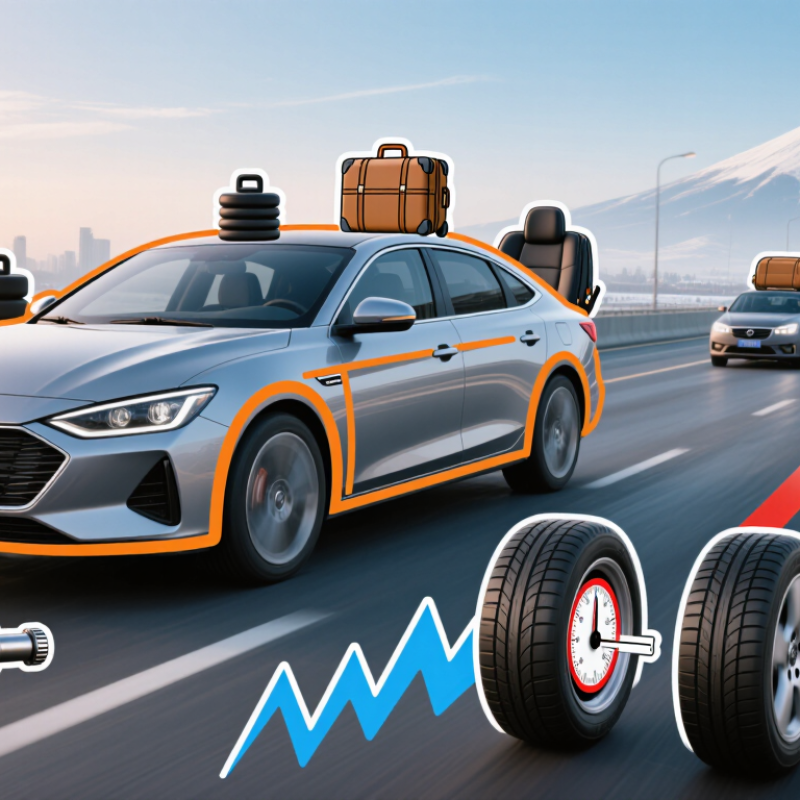
So, what affects fuel efficiency of a car? The answer involves more than engine size. Vehicle weight, body shape, tire pressure, rolling resistance, engine technology, transmission calibration, and hybrid-system performance all matter. Driving speed matters too. A car moving steadily at 60–90 km/h may use far less fuel than one crawling through urban traffic. Cold starts are costly. So are steep roads, heavy loads, roof racks, and aggressive acceleration.
This introduction examines China’s top ten influencing factors through engineering evidence and real driving conditions. It refers to data and guidance from the IEA, China’s Ministry of Industry and Information Technology, the U.S. Environmental Protection Agency, and the Global Fuel Economy Initiative. These sources provide useful benchmarks, but no single report explains every driver’s experience. A compact sedan may perform efficiently in Shanghai, yet lose its advantage in winter traffic or mountain regions. The ranking is therefore practical, not absolute. Some assumptions need testing. A low official consumption figure can still disappoint at the fuel pump. Real-world habits remain part of the equation.
In China, car fuel efficiency usually means how much fuel a vehicle uses over 100 kilometers. The common measure is liters per 100 kilometers, or L/100 km. A lower number indicates better efficiency. This figure matters during daily commutes, especially when urban fuel prices and traffic delays increase driving costs.
Certified laboratory figures offer a useful comparison between vehicles. They cannot fully represent Beijing congestion, mountain roads, or long summer air-conditioning use. Real consumption depends on traffic flow, driving speed, vehicle load, tire pressure, road slope, weather, and maintenance. Short trips can be surprisingly inefficient because the engine needs time to reach its normal operating temperature. Idling at crowded intersections also consumes fuel without adding distance.
A practical check is to record fuel added and kilometers driven across several refills. One tank can mislead you. Heavy luggage, low tire pressure, or repeated stop-and-go driving may change the result. Smooth acceleration helps, but driving too slowly on a fast road can create other risks. Hybrid vehicles may perform especially well in dense city traffic, while highway efficiency depends more on speed and wind resistance. Fuel quality is regulated, yet consumption still varies between locations and seasons. My earlier assumption that the official number predicts every journey would be too simple. Chinese driving conditions are too diverse for one figure to tell the whole story.
Fuel efficiency in China refers to how far a vehicle can travel using a given amount of fuel, commonly expressed as L/100 km. The relative impact index ranks real-world factors according to their typical influence on fuel consumption. Traffic congestion, driving behavior, vehicle weight, air conditioning, tire pressure, road gradient, weather, and vehicle maintenance can all cause actual fuel use to differ from official test-cycle results.
Fuel consumption changes with speed, acceleration, and braking habits. Aggressive starts waste energy, while steady driving usually uses less fuel. Idling also consumes fuel without moving the car. Tire pressure matters, too. Underinflated tires increase rolling resistance and heat. Extra passengers, tools, or luggage add weight. I once blamed the engine for poor mileage, but a roof box was the real cause.
Engine condition affects combustion quality. Dirty filters, worn spark components, or incorrect fluid levels may reduce efficiency. Air conditioning adds engine load, especially in slow traffic. Traffic congestion creates repeated stops and long idle periods. Road gradients and rough surfaces demand more power. Cold weather can also increase consumption during warm-up. Fuel quality and the vehicle’s recommended fuel specification should not be ignored. These factors overlap, so one test rarely proves the cause.
Tips: Check tire pressure when tires are cold. Remove unnecessary items from the trunk. Plan routes with fewer stops when possible. Keep a simple fuel log for several weeks. Record distance, traffic, weather, and load. Small errors in measurement can mislead you. If consumption changes suddenly, arrange a qualified inspection instead of guessing. Smooth throttle control helps, but it cannot repair a mechanical problem.
Chinese urban roads can change fuel consumption before the engine reaches its normal temperature. Frequent traffic lights, sudden lane changes, bus stops, and short junctions interrupt steady movement. The 2023 China Urban Transport Development Report identifies commuting congestion as a continuing challenge in major cities. These delays create long idling periods and repeated acceleration. The U.S. Department of Energy reports that aggressive driving can reduce fuel economy by 15–30% on highways and 10–40% in stop-and-go traffic. Those figures are not exact for every Chinese city, but they show the mechanical cost of impatient driving.
Road surface and route design also matter. Roadworks, steep ramps, flooded sections, and uneven pavement force frequent speed adjustments. Expressway driving is usually smoother, yet toll queues and holiday traffic can erase that advantage. The International Energy Agency’s Global Fuel Economy Initiative notes that real-world fuel use often differs from laboratory results because traffic conditions and driving behavior vary. A shorter route may consume more fuel if it contains ten extra intersections. This is easy to overlook.
Tips: Watch traffic-light timing and lift off early. Avoid hard acceleration after every signal. Check tire pressure before long trips. Choose a steady route, even when it is slightly longer. Keep an honest record of fuel use; memory is unreliable, and one trip proves very little.
In China, fuel economy changes with traffic, road gradients, weather, and driving habits. Measuring it well matters more than trusting a dashboard estimate. A practical test starts with a full fuel tank and a reset trip meter. Record the fuel added after driving, then calculate liters used per 100 kilometers. Repeat the test on a similar route. Keep a log.
For controlled comparisons, use the same vehicle, route, load, and tire pressure. Record temperature, rain, traffic speed, and air-conditioning use. Urban congestion can produce very different results from steady highway driving. A 100-kilometer test is useful, but it cannot explain every change. Rain and cold starts matter. Laboratory cycles provide consistent data, while real roads reveal daily conditions. Both methods have value.
Improvement begins with correct tire pressure and reduced unnecessary cargo. Gentle acceleration and earlier braking can lower wasted energy. During long waits, avoid needless idling when conditions allow. Air conditioning also affects consumption, especially during hot summer traffic. Plan routes with fewer stops, but do not chase a longer route simply to avoid one hill. My early tests were too short, so I trusted random results. That was a mistake. A week of mixed driving gives better evidence, though even that record may contain hidden factors.
China Top 10 Factors Affecting Car Fuel Efficiency
Future Trends in China’s Car Fuel Efficiency Standards
China’s fuel efficiency standards are moving beyond laboratory numbers. Future rules are likely to examine real driving conditions, including traffic congestion, cold starts, air-conditioning use, and stop-and-go urban travel. These details matter because a car using 5.5 litres per 100 kilometres on a test route may consume more in a crowded city. Engine calibration, vehicle weight, tyre pressure, aerodynamics, and fuel quality will remain important factors.
Electrification will influence the next stage of regulation. Hybrid vehicles may receive closer attention because their efficiency depends on battery size, driving patterns, and charging conditions. Fully electric vehicles could face broader efficiency checks, including energy use during winter heating and high-speed travel. Lightweight materials and smaller engines may help, but lighter construction can increase repair costs. That trade-off deserves more honest discussion.
Regulators may also strengthen carbon-based assessments across a vehicle’s life cycle. Manufacturing energy, battery production, and recycling could become more relevant. Digital monitoring may compare certified results with everyday performance. Useful, but not perfect. Data quality can vary between cities, roads, and seasons. I may be too optimistic about how quickly testing can reflect real drivers. Human habits still matter. Gentle acceleration, correct tyre pressure, and regular maintenance can improve efficiency before any new rule takes effect.
Frequent signals, bus stops, and lane changes interrupt steady movement. Repeated acceleration uses extra fuel. Long idling wastes fuel too. Traffic is expensive.
Yes. A short route with ten intersections may consume more fuel than a longer, steadier road. Compare stops, ramps, and traffic flow. Distance alone can mislead.
Watch signal timing and lift off the accelerator early. Avoid hard acceleration after every green light. Smooth movement usually wastes less energy.
Steep ramps, uneven pavement, roadworks, and flooded sections require repeated speed changes. Toll queues can reduce the benefit of smooth expressway driving. Conditions change quickly.
Fill the tank, reset the trip meter, and record the fuel added later. Calculate liters per 100 kilometers. Repeat the test on a similar route. One trip proves little.
Record traffic speed, weather, temperature, air-conditioning use, tire pressure, and vehicle load. Keep the route and driving style similar. Small differences matter.
Correct tire pressure can reduce rolling resistance and unnecessary energy loss. Check it before long trips. Do not rely on appearance alone.
Yes, especially during hot urban traffic and slow-moving journeys. Its effect varies with temperature, traffic, and vehicle condition. My early tests ignored this factor.
It provides useful evidence, but it cannot explain every change. Rain, cold starts, hills, and congestion can distort the result. A weekly log is better.
Hard acceleration, late braking, needless idling, and carrying unused cargo increase energy use. Gentle inputs help. Perfect savings are unrealistic, though.
Fuel efficiency in China refers to how far a vehicle can travel using a specific amount of fuel, usually measured in liters per 100 kilometers. What affects fuel efficiency of a car includes engine design, vehicle weight, tire pressure, driving habits, maintenance, air conditioning use, and fuel quality. Aerodynamic shape and transmission performance also influence how efficiently energy is converted into movement. Regular servicing, correct tire inflation, reducing unnecessary cargo, and maintaining a steady speed can help lower fuel consumption.
Road and traffic conditions are especially important in China, where congestion, frequent stops, steep roads, and changing weather may increase fuel use. Fuel economy can be measured through standardized tests as well as real-world driving records, although actual results vary by location and driving style. Looking ahead, stricter efficiency standards, improved testing methods, lightweight materials, hybrid technology, and electrification are expected to encourage cleaner and more economical transportation.
