Choosing a material for an auto part affects its weight, service life, safety, and cost. A lightweight door panel has different demands from a brake component or an engine mount. “What materials are best for auto parts” depends on where the part works, how it is loaded, and what conditions it must withstand. There is no universal winner.
Steel remains useful where strength, stiffness, and predictable manufacturing matter. Aluminum can reduce weight, but buyers should consider its grade, joining method, and exposure to corrosion. Engineering plastics suit many housings, clips, and interior parts because they can be shaped precisely and resist moisture. Yet heat, vibration, and chemical contact can change their performance. Rubber helps isolate vibration and seal gaps. Composites may offer a strong, light option, though repair and production costs deserve attention.
A material name alone is not enough. Ask for the exact grade, technical data, and evidence that the part has been tested under relevant conditions. A sample may look sound on a workbench, then behave differently near a hot engine or under repeated vibration. Small details matter. Compare weight, expected loads, operating temperature, corrosion exposure, production volume, and maintenance needs. Check supplier quality records and part traceability, too.
Experience helps, but it can also create assumptions. A familiar material may not suit a new design. Buyers should compare documented performance with real use conditions and review trade-offs with qualified engineers. Even a tidy comparison can miss something. The best choice is usually the material that reliably meets the part’s actual requirements—not the one with the most impressive specification.
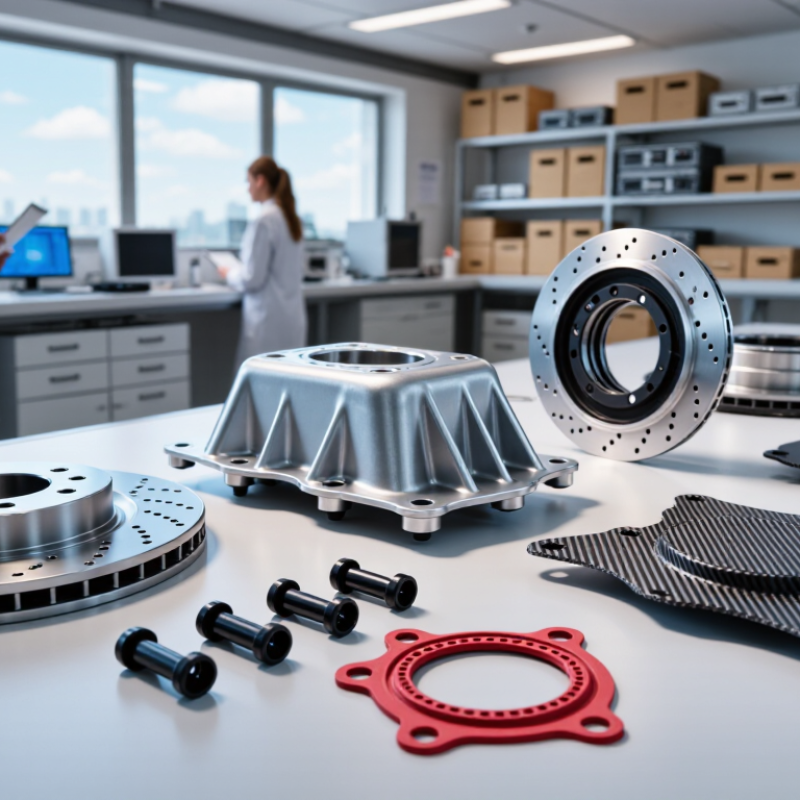
Define Buyer Criteria: Strength, Crash Safety, Cost, Repairability, and Recycling
Buyers should match material properties to the part’s job, not choose by strength alone. A bracket near a hot engine needs different performance from a door panel exposed to repeated impacts. Ask for test data on strength, fatigue, corrosion, and temperature; a single headline number rarely tells the whole story.
Crash safety depends on the full structure, including geometry, joints, and controlled deformation. A very stiff component may protect one area while transferring force elsewhere. Request evidence from relevant component or vehicle-level testing, and confirm that production parts use the same specifications. Numbers can mislead.
Purchase price is only part of cost. Tooling, machining, joining, inspection, and expected replacement rates all affect the final bill. Repair access matters. Check whether damaged sections can be replaced with common workshop methods, or whether a minor impact requires a larger assembly change. That difference can shape downtime and ownership expense.
Recycling also deserves practical questions. Ask how easily the material can be separated from coatings, adhesives, or mixed-material inserts. Clean streams are generally easier to recover, but local processing capacity varies. Trade-offs remain: lighter materials may reduce vehicle mass, yet require more complex repairs or sorting. Buyers should compare these factors against actual service conditions, not idealized estimates.
Steel Grades: Compare Strength-to-Weight, Formability, and Corrosion Resistance
For auto parts, steel selection is a three-way trade-off: strength, formability, and corrosion resistance. WorldAutoSteel’s Advanced High-Strength Steel Application Guidelines describe automotive grades with tensile strengths reaching roughly 1,500 MPa. Higher strength can allow thinner sections, but it does not automatically make a part lighter or safer. Geometry, joining, and crash loads still matter.
Formability determines whether a sheet can be stamped into a deep door panel without cracking or excessive springback. Mild steel is often easier to shape; advanced high-strength grades may need tighter process control. The U.S. Department of Energy reports that reducing vehicle weight by 10% can improve fuel economy by about 6–8%. That is a useful benchmark, not a guarantee for every component. Corrosion resistance depends on more than the base grade: zinc-coated sheet, cut edges, trapped moisture, and coating damage all affect service life. A strong grade can still disappoint if the part’s drainage and coating details are overlooked.
Tips: Match the grade to the part’s actual forming and load requirements, then test stamped samples and coated edges. Check supplier data for tensile strength, elongation, and coating mass. Small detail. A lab result may not fully predict years of road exposure.
2026 Best Materials for Auto Parts: What Should Buyers Know?
Steel Grades: Compare Strength-to-Weight, Formability, and Corrosion Resistance
How to read this chart: Bars show representative minimum tensile strength in MPa; specifications and delivered properties can vary by standard, thickness, and supplier. Steel density is generally about 7.85 g/cm³, while austenitic 304 stainless steel is about 8.0 g/cm³, so strength-to-weight differences broadly track strength differences.
Buyer notes: DC04 low-carbon steel is highly formable but usually needs a protective coating against corrosion. S350MC HSLA and DP600 dual-phase steel offer higher strength, with forming behavior that depends on part geometry and processing. 304 stainless steel offers strong atmospheric corrosion resistance and good formability, but can be susceptible to chloride pitting and work-hardens during forming.
Representative minimum tensile-strength values: DC04, EN 10130; S350MC, EN 10149-2; DP600, representative 600 MPa-class dual-phase specification; 304, ASTM A240. Verify the exact grade and product specification before design or purchasing.
Aluminum Content: North American Vehicles Averaged 459 lb per Vehicle in 2020 (AA)
North American vehicles averaged 459 lb of aluminum per vehicle in 2020, according to AA.
That figure shows how significant the material had become, but it is an average, not a target for every model. Vehicle size, design, and component choice all affect aluminum content. The metal may appear in body panels, structural parts, wheels, or housings. Each application has different demands. A thin panel must form cleanly and resist dents; a structural part must meet specific stiffness and strength needs. The number is useful, but easy to overread.
For buyers comparing auto parts, check the component’s exact material and fit, not just a general claim of “lightweight.” Aluminum can reduce mass and resist corrosion, yet it may cost more to manufacture or require different joining and repair methods than steel. A small bracket also faces different loads from a suspension component. Fit matters. Look for clear specifications, compatible fasteners, and documented testing where available. A part that saves weight on paper may not be the best value if its finish, tolerance, or service life is uncertain. Material choice is rarely simple. Even the 459-pound average cannot explain how well one specific part performs.
Lightweighting: DOE Estimates Aluminum Can Cut Component Weight by 50%
Aluminum can make a meaningful difference when engineers target heavy individual parts.
The U.S. Department of Energy estimates that aluminum can reduce component weight by up to 50% compared with steel in some applications.
That figure is not a promise for every part, or for an entire vehicle. A hood, bracket, or door panel has different loads and design limits.
The benefit starts with less mass to move.
A lighter door can reduce strain on hinges, while a lighter hood can help lower front-end weight. Small gains add up across many components. But the material alone does not guarantee a lighter assembly. Designers may need thicker sections, reinforcing ribs, or different joining methods to meet stiffness and crash requirements. Those additions can narrow the original weight advantage.
Buyers should ask which component was compared, and whether the estimate includes fasteners and reinforcements. They should also consider corrosion protection, fatigue performance, repair needs, and production cost. Aluminum resists rust, but joints and surface treatments still matter.
Details matter.
A supplier’s weight claim is more useful when backed by drawings, test conditions, and a clear steel baseline. I would not choose a material from a percentage alone; real-world durability can be less tidy than a headline.
Plastics and Composites: Assess Durability, Heat Tolerance, and End-of-Life Options
For auto parts, plastics and composites can reduce weight, resist corrosion, and support complex shapes. Their performance still depends on the part’s job. A dashboard trim piece faces different stresses than an under-hood bracket. Polypropylene often suits moderate loads, while reinforced nylon can offer greater stiffness. Yet moisture, repeated vibration, and chemical exposure may change performance over time. Heat matters, too. Check the material’s rated service temperature, not just its melting point. A component near an engine may soften, creep, or lose strength during repeated heat cycles.
Tips: Review temperature and chemical test data. Ask whether samples were tested under conditions resembling the vehicle’s actual use. Look for cracks around fasteners and discoloration after heat exposure. Small details count.
End-of-life planning deserves attention before production. A single-material plastic part is generally easier to sort and recycle than a part bonded to metal, foam, or several resin types. Composites can provide useful strength, but separating their fibers and resin may be difficult. Recycled content can also vary in quality, so confirm that it meets the component’s performance needs. There is no perfect choice here. Designers may need to balance durability, repairability, weight, and disposal options. A material that lasts longer is not automatically the better choice if it cannot be practically recovered.
Conclusion
Choosing the right material for an auto part means balancing strength, crash safety, cost, repairability, and recycling—not simply choosing the lightest option. Steel remains a practical choice across many applications because different grades offer varied strength, formability, and corrosion resistance. Buyers should compare these qualities with the part’s role, expected loads, manufacturing needs, and conditions over its service life.
What materials are best for auto parts depends on the component and the vehicle’s priorities. Aluminum can reduce weight substantially; North American vehicles averaged 459 pounds of aluminum per vehicle in 2020, and the U.S. Department of Energy estimates that aluminum can cut component weight by up to 50%. Plastics and composites may also support lightweight designs, but buyers should assess their durability, heat tolerance, repair options, and end-of-life pathways. Considering performance, total cost, and recyclability together helps identify materials suited to both current needs and long-term use.
 Komfort Auto Parts
